

First Autonomous Test Vehicle Entirely Developed by Toyota Research Institute
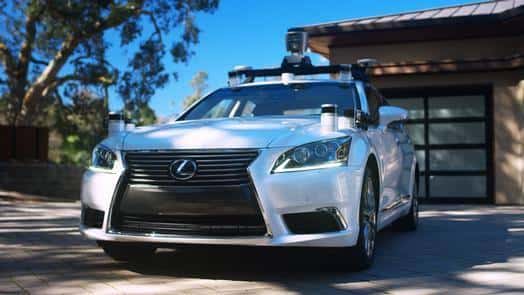
On March 3rd, Toyota Research Institute revealed the latest version of its 2.0 generation advanced safety research vehicle. It was displayed to the public for the first time at the company’s Prius challenge event in Sonoma, California. They started working on this kind of vehicles in 2005 in their technical center in Ann Arbor, Michigan. In 2006, the company secured its first U.S. patents in the field. According to the article issued in Intellectual Property and Science division of Thomson Reuters last year, Toyota has more patents than any other company in the field.
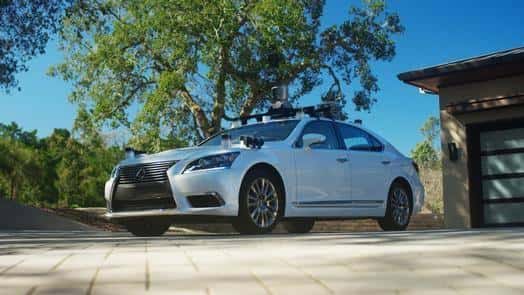
“This new advanced safety research vehicle is the first autonomous testing platform developed entirely by TRI, and reflects the rapid progress of our autonomous driving program,” said TRI CEO Gill Pratt.
The Japanese automaker showcased this autonomous research vehicle in 2013 at Consumer Electronics Show in Las Vegas. Since then, company has been working on self-driving cars in the Toyota research Institute in Silicon Valley. In order to increase R&D on artificial intelligence further plans include an investment of $1 billion during the next five years.
These automated vehicles are capable of taking over the driving duties, thus becoming something like robotic chauffeurs. The artificial intelligence and sensors in these self-driving cars rely on a system called ‘Guardian’, which completely prevents car crashes. Ryan Eustice, vice president of autonomous driving for Toyota Research Institute said, “With a Guardian vehicle the palette of things the car can do would be way more than just using the steering wheel and stepping on the brake.”
“Imagine going through an intersection and you’re going to get T-boned. The right thing for the car to do is accelerate you out of that. That requires a huge amount of understanding on the car’s part to be able to safely do that.”
‘Guardian’ can be more significant in terms of using AI authorized controls in warning drivers of possible collisions and taking action if the driver can’t prevent hitting cyclists or pedestrians. This is a high-level driver-assisting system which constantly monitors environment outside and inside of the vehicle.
“Basically, it is a smart vehicle designed to get smarter over time,” said Pratt. “It will learn individual driver habits and abilities and will benefit from shared intelligence from other cars as data gathering, sharing and connectivity technologies advance. We believe Guardian can probably be deployed sooner and more widely than Chauffeur, providing high-level driver-assist features capable of helping mitigate collisions and save lives, sooner rather than later.”
Toyota Automatic Emergency Braking will be a part of standard equipment of nearly all models of Lexus and Toyota vehicles in the U.S. by the end of 2017, which is five years earlier than NHTSA’s 2022 planed date.
The reason why Silicon Valley was chosen is the talent. At this moment TRI employs around 150 people in Michigan, Silicon Valley and Massachusetts. There are some plans to increase staff numbers to 250 people in the near future.
http://pressroom.toyota.com/video_display.cfm?video_id=33536
http://pressroom.toyota.com/video_display.cfm?video_id=33532
0 comment(s) so far on First Autonomous Test Vehicle Entirely Developed by Toyota Research Institute